The WNBA has a message for fans who intentionally disrupt games: enough is enough.
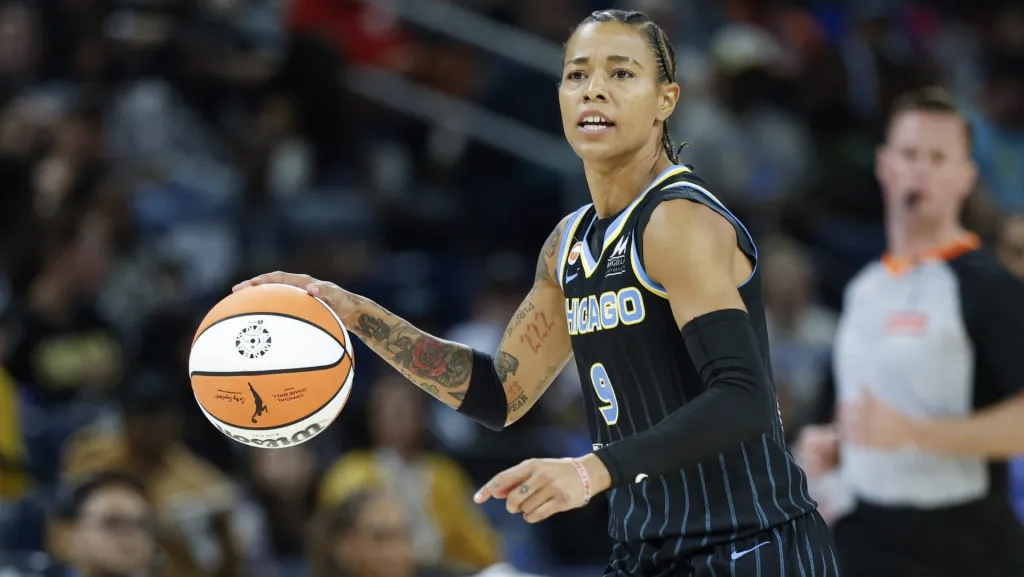
Chicago Sky veteran Natasha Cloud made that message even louder following another disturbing incident involving a sex toy being thrown onto the court during a WNBA game.
During the Sky’s 73-70 victory over the Golden State Valkyries on Friday, Aug. 21, multiple sex toys were thrown onto the court, briefly stopping play and creating another unwanted distraction during a league season already receiving unprecedented attention.
Cloud did not hold back when discussing the incident afterward.
“Y’all lame as f**… It’s a disruption of the game. And the men that are throwing it, it shows that you are weak like, extremely weak. And it says a lot about how you feel about women, but we don’t care.”
For Cloud, the issue isn’t simply about an object landing on a basketball court.
It’s about respect.
And the WNBA has been down this road before.
This Problem Started Last Season
The latest incidents are a disturbing reminder of what happened across the WNBA during the summer of 2025.
Beginning in July 2025, spectators repeatedly threw bright green sex toys onto or toward WNBA courts.
The incidents occurred in multiple cities, including Atlanta, Chicago, Los Angeles, Phoenix and New York. In one of the most alarming incidents, a sex toy thrown during the Indiana Fever’s game against the Los Angeles Sparks landed near Sophie Cunningham.
Cunningham had already expressed concern about the trend before becoming one of its targets.
“Stop throwing dildos on the court… you’re going to hurt one of us.”
Her warning proved to be more than hypothetical.
The object thrown during the Sparks-Fever game landed near Cunningham, causing her to jump back in surprise.
The incidents became so frequent that the WNBA was forced to issue a league-wide warning.
The league stated that objects thrown onto the court or into seating areas could pose a safety risk to players, officials and fans. Under the league’s arena security standards, fans intentionally throwing objects could be immediately ejected and face a minimum one-year ban, as well as potential arrest and prosecution.
It Wasn’t Just a Joke
Some perpetrators attempted to characterize the incidents as pranks.
One man arrested in connection with a 2025 incident reportedly told police that the stunt was supposed to be a joke that would go viral. Another described his actions as a social-media prank.
But from the perspective of the players, there is nothing funny about an object flying toward them while they’re competing.
There’s also a serious safety issue.
A sex toy isn’t a harmless piece of trash. When thrown from the stands, it becomes a projectile moving toward athletes, officials or spectators who may have no opportunity to react.
One 2025 incident in Phoenix resulted in an object striking a spectator and reportedly hitting a child who was attending the game.
That’s where the conversation moves beyond embarrassment and into accountability.
Angel Reese Also Had a Front-Row Reaction
The problem resurfaced one night earlier, during the Atlanta Dream’s game against the Los Angeles Sparks on Aug. 20.
A green sex toy landed on the court while Sparks rookie Jihyun Park was preparing to shoot a free throw.
Angel Reese, who was waiting to enter the game, immediately pointed toward the stands and attempted to alert security to the person responsible.
The suspect was subsequently apprehended, according to reports, and faced an indefinite ban from WNBA, NBA and affiliated events.
That moment was significant because Reese wasn’t laughing.
She wasn’t treating it like a social-media stunt.
She was trying to make sure security found the person responsible.
The Sexualization of Women’s Sports
The repeated incidents also raise a much larger question.
Why has this particular form of disruption repeatedly targeted the WNBA?
Minnesota Lynx head coach Cheryl Reeve addressed that question during the 2025 incidents, connecting the behavior to the broader history of sexualizing women athletes.
That context matters.
The WNBA has spent years fighting for its athletes to be respected as elite professional basketball players. The league’s explosive growth has brought larger audiences, increased media attention and more cultural relevance.
But increased visibility also means more people are looking for ways to turn the league’s biggest moments into viral content.
And sometimes, that attention crosses a line.
Where Should the Line Be Drawn?
The WNBA already has consequences for fans who intentionally throw objects onto the court.
But the repeated nature of these incidents raises a legitimate question:
Are the existing penalties strong enough?
A minimum one-year league ban sounds significant, but some fans and players may argue that intentionally throwing an object at professional athletes should carry much more severe consequences—particularly when the object is sexually explicit or when someone is injured.
The league also has to balance accessibility and security.
WNBA games are supposed to be energetic, passionate and fan-friendly. But that atmosphere can’t come at the expense of player safety.
There is a difference between heckling a player and throwing something at her.
There is a difference between being passionate and intentionally stopping a professional sporting event.
And there is absolutely a difference between a harmless joke and behavior that could injure someone.
Cloud’s Message Is Bigger Than One Game
Natasha Cloud’s frustration reflects something bigger happening throughout women’s sports.
Players are no longer willing to simply shrug off behavior that they believe disrespects them.
The WNBA has grown too much—and its athletes have worked too hard—to allow intentional disruptions to become part of the spectacle.
The league’s popularity should mean bigger crowds, louder arenas and greater investment in the players.
It shouldn’t mean more opportunities for people to turn athletes into props for a viral stunt.
Cloud made her position clear.
So did Angel Reese.
So did Sophie Cunningham before them.
And the message from the players is becoming increasingly difficult to misunderstand:
Come to the game. Support the players. Make noise. Have fun.
But don’t cross the line.
Because when the object leaves the stands and enters the court, it’s no longer just a joke.
It’s a disruption—and potentially a safety threat.
What do you think?
Should the WNBA increase penalties for fans who intentionally throw objects onto the court, particularly when the objects are sexually explicit or someone is injured?