
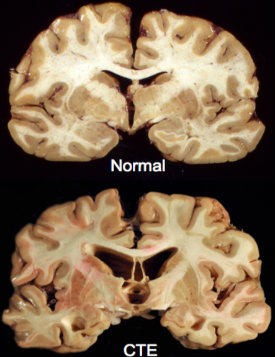
For years, diagnosing chronic traumatic encephalopathy (CTE) in living athletes has been considered one of the biggest challenges in sports medicine. New research, however, could bring scientists closer to making that possible.
Two recently published studies in the Journal of the American Medical Association (JAMA) identified a blood-based protein biomarker that may help detect advanced stages of CTE.
The research focuses on a protein fragment known as eMTBR-tau243, which is associated with abnormal tau buildup in the brain. Researchers found elevated levels of the biomarker in blood samples from individuals whose brain autopsies later confirmed advanced CTE.
One study from Boston University and Banner Health examined 21 former football players, including athletes who competed professionally, collegiately and at the high school level. A separate study led by Washington University School of Medicine in St. Louis examined 11 individuals with autopsy-confirmed CTE.
The findings are encouraging, but researchers emphasize that the work remains preliminary. The biomarker showed promise in identifying advanced CTE but could not reliably detect early-stage disease.
Currently, CTE can only be definitively diagnosed through examination of brain tissue after death. A reliable test for living patients could potentially help former athletes understand their neurological health, advance treatment research and make clinical trials possible.
Researchers caution that larger studies are necessary before the findings can translate into an approved diagnostic test. There is currently no FDA-approved test or treatment specifically for CTE.
The research could represent an important step toward answering a question that has followed football for decades: Can we identify the long-term damage while athletes are still alive?
SOURCE: ESPN | Associated Press | Washington University Medicine