image via NBA.com
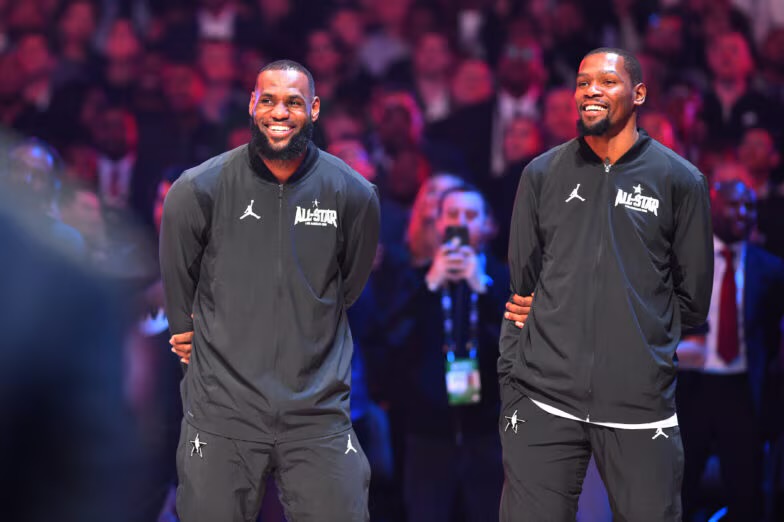
LeBron James and Kevin Durant are expanding their influence in basketball beyond the professional level.
The two NBA superstars are backing a new high school basketball league called the Futures Basketball League (FBL), which plans to launch with 12 teams in April 2027.
One of the league’s most notable features is its proposed compensation structure. Eligible players could receive their name, image and likeness (NIL) compensation in cash, equity, or a combination of both.
What We Know About Futures Basketball League
The inaugural season will feature 120 players under the age of 18, representing high school graduating classes of 2028 through 2031.
Additional details include:
- 12 regional teams: Each team will represent a geographic market.
- Season: April through August 2027.
- Competition: 10 league weekends, followed by a national championship.
- NIL opportunities: Players can receive compensation in cash, league equity, or both, subject to administrative approvals.
- Player development: Coaching, strength and conditioning, recovery, sports science, mentorship and educational support.
- Outside partnerships: Players will retain the ability to pursue additional NIL deals, including footwear partnerships.
The league has already started signing prospects to NIL agreements, with its first player announcements expected in the coming weeks.
Who Is Behind the League?
The ownership and investment group includes several prominent names in basketball and business.
- LeBron James and Maverick Carter through LRMR Ventures.
- Kevin Durant and Rich Kleiman through Boardroom Sports Holdings.
- Derrick Rose.
- Paolo Banchero.
- Gary Vaynerchuk
- Jason Stein and Daniel Haimovic of SC Holdings.
Derrick Rose and Paolo Banchero will also serve as team owners.
Why This Matters
Futures Basketball League could introduce a new business model to grassroots basketball.
Rather than simply offering high-level competition, the league is attempting to give elite high school prospects a financial stake in the organization while providing professional-style development resources.
Its arrival could also create competition with established grassroots basketball circuits, including Nike’s EYBL, adidas 3SSB and Under Armour’s youth basketball programs.
The bigger question: Could giving high school athletes the opportunity to earn equity change how young basketball players approach their careers before reaching college?