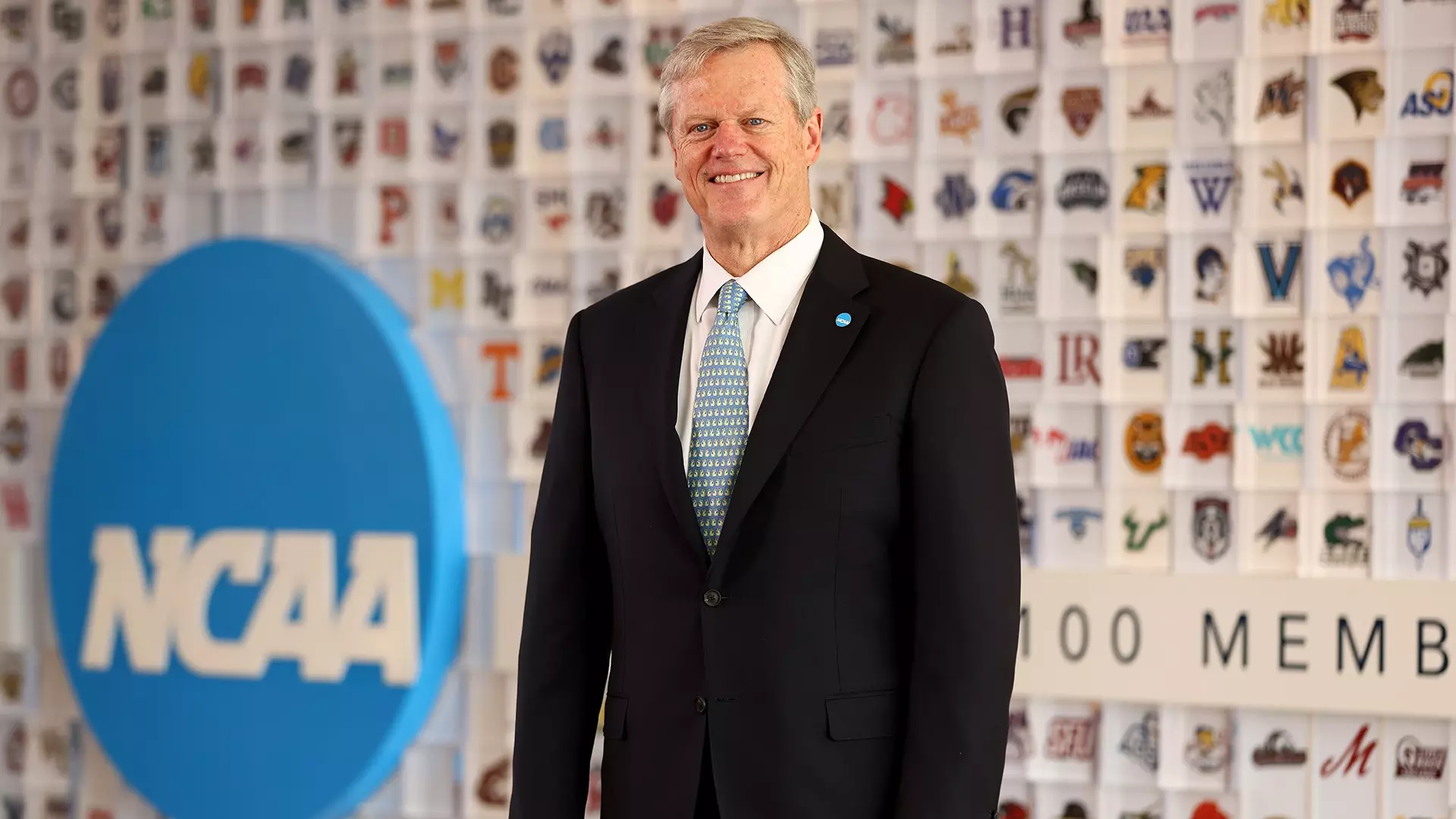
Just days after the U.S. Supreme Court upheld state laws restricting participation in girls’ and women’s school sports based on biological sex, NCAA President Charlie Baker says the decision will not result in immediate changes to the association’s transgender athlete policy.
Speaking with CBS News’ Face the Nation, Baker said he does not believe the NCAA will need to revise its current rules following the Court’s ruling, signaling that the organization plans to stay the course despite one of the most significant sports governance decisions in recent years.
Baker: No Immediate Changes Expected
Baker acknowledged the significance of the Supreme Court’s decision but indicated that the NCAA’s existing framework remains in place.
His comments suggest the association believes its current policies already align with the legal environment facing college athletics. While individual states may continue enforcing their own laws governing school sports, Baker emphasized that the NCAA does not anticipate making policy changes solely because of the Court’s ruling.
What This Means for College Athletics
Baker’s remarks provide an early indication that colleges and universities should not expect immediate changes to NCAA competition rules.
However, schools will continue navigating a complex landscape in which state laws, conference policies, and NCAA regulations may not always align. Institutions in conferences spanning multiple states could still face compliance challenges as differing legal standards remain in effect.
The NCAA is expected to continue monitoring legal developments as additional cases and policy questions emerge.
A New Chapter in Sports Governance
Although the Supreme Court’s decision represents a landmark legal ruling, Baker’s response makes clear that its practical impact on NCAA competition will not be immediate.
Instead, the association appears focused on maintaining stability while evaluating the broader implications for college athletics.
That measured approach reflects the NCAA’s ongoing effort to balance competitive fairness, student-athlete participation, and compliance with evolving federal and state law.
As legal challenges continue and additional guidance emerges, the NCAA’s position could evolve. For now, however, Baker’s message is straightforward: the Supreme Court’s decision does not require an immediate change to NCAA policy. (CBS News)